Improved Formula
A redesigned cardio-metabolic capsule for blood sugar and heart health, at the same one capsule twice a day
PK/PD simulation and evidence review
November 4, 2026
The bottom line
| Engagement index (improved = 100) | Blood sugar (5 mechanisms) | Liver fat | Blood pressure |
|---|---|---|---|
| Current Formula | 7.9 | 66 | <1 |
| Market Comparator | 17 | <1 | 3.6 |
| Improved Formula | 100 | 100 | 100 |
Each product’s engagement on a mechanism as a share of the improved formula’s, averaged over the mechanisms in each group.
- Headline
- Current Formula is already behind the market. Its one strength is liver fat; across the other 6 blood-sugar and
blood-pressure mechanisms scored, Market Comparator, a one-a-day blood-sugar capsule sold in India, averages 2.2 times its engagement.
The improved formula beats both on all 7 mechanisms and on all 4 customer outcomes scored (after-meal blood sugar, day-to-day blood sugar, blood triglycerides and liver fat). Averaged across the mechanisms, it engages more than 6.5 times as strongly as either product, in the same 100 simulated adults, at the same one capsule twice a day; neither product engages insulin signalling, blood pressure (ACE) or DPP-4.
It carries three actives with human trials on blood sugar or blood pressure that the current product lacks:
berberine [5, 6], chlorogenic acid from green coffee [8] and resveratrol [9], and keeps the pomegranate ellagic acid of BeepActive in a quarter of the capsule space.
Berberine comes as Berbevis, a phospholipid form. In the simulation it delivers 1.8× the blood exposure of plain berberine at the same dose and holds a 4.7× higher level through the night; in a human crossover trial the
same form gave 6.75× the total plasma berberine [7].
Of the five formulas shortlisted, this one leads on the most mechanisms (6 of 7). Green coffee is its strongest single contributor, but the formula beats green coffee alone on all 7 mechanisms, and without green coffee it still beats Current Formula on 7.
The need
Why a stronger cardio-metabolic formula matters for these customers.
In India’s national survey of adults, 11.4% have diabetes and a further 15.3% have prediabetes [1]. Raised blood sugar travels with raised blood pressure and cholesterol, so a product for this customer is judged on all three: after-meal and day-to-day blood sugar, LDL cholesterol and blood pressure.
Where Current Formula stands today
- One active, studied for blood flow. BeepActive’s published trial measured flow-mediated dilation and fatigue in 21 healthy adults aged 20–35 over 7 days; 500 mg a day performed as well as 1,000 mg [2]. It reported no blood sugar, HbA1c, blood pressure or cholesterol outcomes; fasting glucose was checked only at screening.
- Nitrate below the studied range. Two capsules a day provide about 25 mg (0.4 mmol) of nitrate. In blood-pressure trials of beetroot nitrate, the fall in systolic pressure rises with the daily nitrate dose [4], and 7.5 mmol a day for two weeks did not lower blood pressure or improve insulin sensitivity in people with type 2 diabetes [3].
- CoQ10 with a small glucose effect. Pooled trials of CoQ10 show a modest fall in fasting glucose (about 7 mg/dL); the change in HbA1c was not statistically significant, and the certainty of evidence is very low [10].
The improved formula
One capsule twice a day after food, 600 mg per capsule: the same daily routine as Current Formula.
| Ingredient | Per capsule | Marker per capsule | Role |
|---|---|---|---|
| Berbevis (Berberis aristata root, berberine phospholipid form) | 275 mg | Berberine 77 mg | Blood sugar and LDL cholesterol |
| Green coffee bean extract, 50% chlorogenic acid | 140 mg | Chlorogenic acid 70 mg | Blood pressure and insulin sensitivity |
| Pomegranate peel extract, 40% ellagic acid | 125 mg | Ellagic acid 50 mg | The ellagic acid of BeepActive, at a quarter of the mass |
| Trans-resveratrol, 98% | 60 mg | Resveratrol 59 mg | Blood sugar and insulin sensitivity |
Products compared
| Product | Per capsule (label) | Daily routine | Simulated |
|---|---|---|---|
| Current Formula | BeepActive 500 mg (beetroot and pomegranate peel, ≥10% ellagic acid, ≥2.5% nitrate) + CoQ10 100 mg | One capsule twice a day | Ellagic acid, CoQ10 |
| Market Comparator | Mulberry leaf (Reducose, 5% DNJ) 200 mg, black seed oil 200 mg, gymnema 10 mg, bitter melon 10 mg, bilberry, alpha-lipoic acid, Berberis vulgaris, banaba and cinnamon 5 mg each, black pepper 2 mg, chromium 50 µg | One capsule a day | Every ingredient but chromium |
| Improved Formula | Berbevis 275 mg + green coffee 140 mg + pomegranate peel 125 mg + trans-resveratrol 60 mg | One capsule twice a day | All four ingredients |
Why each ingredient
- Berberine. Across randomised trials in type 2 diabetes, berberine lowered HbA1c by about 0.6–0.7 percentage points and fasting glucose by about 0.8 mmol/L [5], and lowered LDL cholesterol [6]. It raises the liver’s LDL receptors by a route distinct from statins [11]. Berberine Phytosome, the form sold as Berbevis, delivered 6.75 times the total plasma berberine of plain berberine chloride in a 12-person crossover [7]. Two capsules give 550 mg of Berbevis a day, the dose Indena recommends
[17].
- Chlorogenic acid. 140 mg a day from green coffee lowered systolic and diastolic blood pressure in adults with mild hypertension in a randomised, placebo-controlled trial [8]. Two capsules give exactly that dose. Chlorogenic acids from green coffee are well absorbed in people [12].
- Resveratrol. Across randomised trials in type 2 diabetes, resveratrol lowered fasting glucose, insulin and insulin resistance; the fall in fasting glucose was significant at 100 mg a day or more, and not at lower doses [9]. Two capsules give 118 mg.
- Pomegranate ellagic acid. BeepActive is standardised to 10% ellagic acid; a 40% pomegranate peel extract delivers the same 50 mg per capsule in 125 mg instead of 500 mg, freeing the space for the three actives above.
How much reaches the body
Each product simulated in the same 100 adults, at its own daily routine.
Simulation basis
Population: 100 simulated Asian adults aged 40–65, half women, body-mass index 22–32, after food; each product at its label routine, simulated over four days and compared on day 4, once levels have settled.
Whole-body physiologically based simulation of every absorbed active, from release out of the capsule through the gut, gut wall, liver and bloodstream. Every identity is resolved through an authoritative chemical database;
Berbevis is simulated with its phospholipid and grape-seed carrier matrix.
Target activity is predicted by our activity models, trained on measured potency data, with measured values used where a molecule’s potency has been measured. Engagement is calculated on the unbound level at each target’s site (blood, liver, pancreas or gut wall), averaged over a full day and combined across every molecule acting on the same target; 20 targets are scored, covering blood sugar, lipids, blood pressure and drug-interaction safety.
All arms run in the same simulated adults: the improved formula, Current Formula, Market Comparator (one capsule a day; grades its label leaves out set at the common high commercial grade), four shortlisted alternative formulas, the improved formula without green coffee, green coffee alone, and Berbevis against plain berberine at the same dose.
Every ingredient with a defined marker is simulated, including Current Formula’s CoQ10 and each of Market
Comparator’s herbs. Two are not: chromium, a mineral, and BeepActive’s nitrate, a simple inorganic ion, whose effect is taken from the published trials cited.
Berberine is also scored in the gut fluid, at the glucose transporter SGLT1 on the gut lining, as a separate scale.
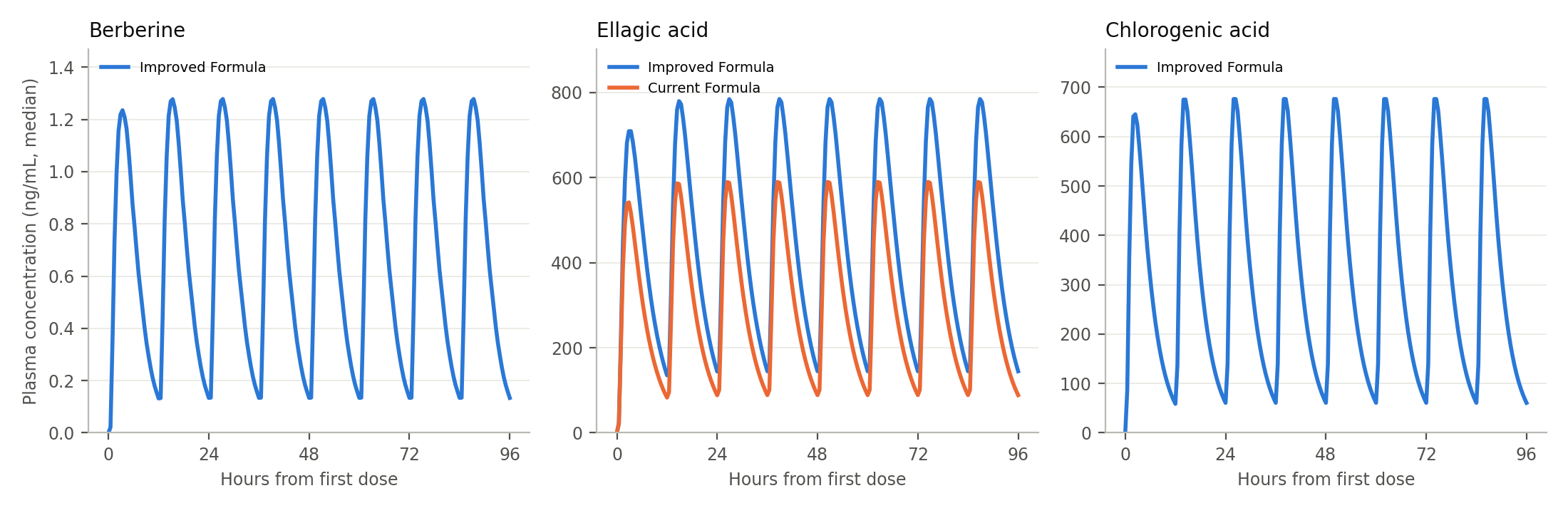
| Product | Molecule | Per day | Reaches blood | Day-4 peak | Lowest level of the day |
|---|---|---|---|---|---|
| Improved Formula | Berberine | 154 mg | <0.1% | 1.28 ng/mL | 0.13 ng/mL |
| Improved Formula | Chlorogenic acid | 140 mg | 28.0% | 676 ng/mL | 60.7 ng/mL |
| Improved Formula | Ellagic acid | 100 mg | 36.9% | 784 ng/mL | 145 ng/mL |
| Current Formula | Ellagic acid | 100 mg | 25.3% | 590 ng/mL | 88.5 ng/mL |
| Market Comparator | DNJ (mulberry) | 10 mg | 52.4% | 73.3 ng/mL | 0.11 ng/mL |
| Market Comparator | Thymoquinone | 2 mg | 47.7% | 32.6 ng/mL | 0.0044 ng/mL |
Median blood levels over four days at each product’s own routine. The improved formula’s two daily capsules keep each active in the blood through the day, where a once-daily capsule falls to near zero before the next dose.
Head to head
Engagement of each mechanism on day 4, indexed to the improved formula = 100.
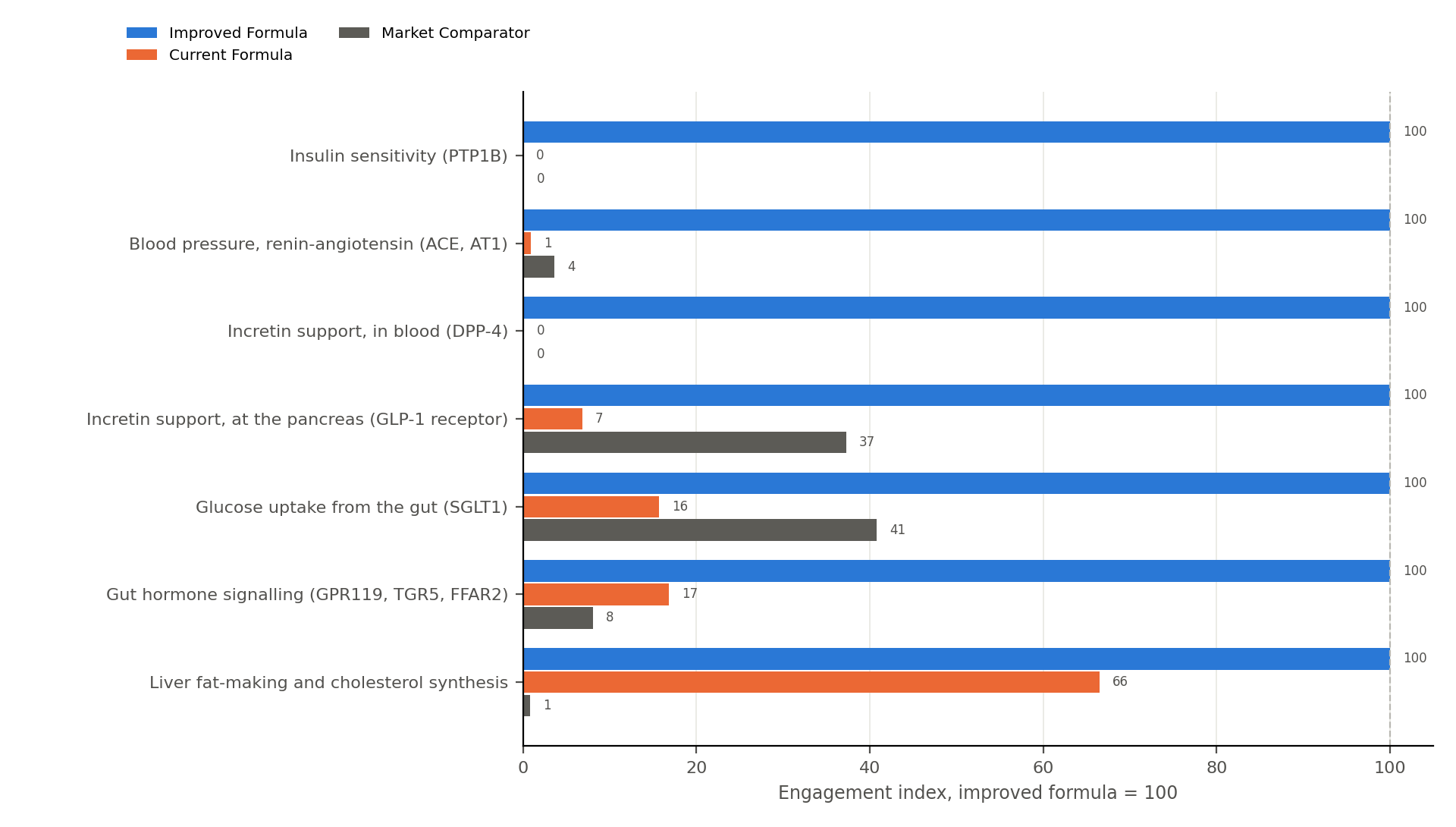
| Mechanism | What it acts on | Improved | Current Formula | Market Comparator | Main contributors |
|---|---|---|---|---|---|
| Insulin sensitivity | PTP1B, the brake on the insulin receptor | 100 | <1 | <1 | Chlorogenic acid 100% |
| Blood pressure, renin– angiotensin route | ACE and the AT1 receptor | 100 | <1 | 4 | Chlorogenic acid 95% |
| Incretin support, in blood | DPP-4, which breaks down GLP-1 | 100 | <1 | <1 | Resveratrol 61%, Chlorogenic acid 34% |
| Incretin support, at the pancreas | GLP-1 receptor on insulin-releasing cells | 100 | 7 | 37 | Resveratrol 61%, Chlorogenic acid 34% |
| Glucose uptake from the gut | SGLT1 at the gut wall | 100 | 16 | 41 | Chlorogenic acid 40%, Resveratrol 35%, Ellagic acid 23% |
| Gut hormone signalling | GPR119, TGR5 and FFAR2 on gut hormone cells | 100 | 17 | 8 | Chlorogenic acid 44%, Ellagic acid 39%, Resveratrol 16% |
| Liver fat-making and cholesterol synthesis | ACC and HMG-CoA reductase | 100 | 66 | <1 | Chlorogenic acid 44%, Ellagic acid 41%, Resveratrol 12% |
Customer outcomes
| Outcome | Through | Improved | Current Formula | Market Comparator |
|---|---|---|---|---|
| After-meal blood sugar | GLP-1 receptor | 100 | 7 | 34 |
| After-meal blood sugar | DPP-4 | 100 | <1 | <1 |
| After-meal blood sugar | SGLT1 | 100 | 17 | 53 |
| After-meal blood sugar | GPR119 | 100 | 21 | 12 |
| Day-to-day blood sugar control | GLP-1 receptor | 100 | 7 | 37 |
| Day-to-day blood sugar control | DPP-4 | 100 | <1 | <1 |
| Day-to-day blood sugar control | SGLT1 | 100 | 16 | 41 |
| Day-to-day blood sugar control | GPR119 | 100 | 20 | 8 |
| Blood triglycerides | PPAR-alpha | 100 | 3 | 16 |
| Fat stored in the liver | ACC, the liver’s fat-making enzyme | 100 | 67 | <1 |
- Reading this
- Each row compares the products on one mechanism. The improved formula leads on all 7. Across them,
chlorogenic acid 56%, resveratrol 27% and ellagic acid 16% is the average share of its engagement each molecule carries.
The blood-pressure benefit of chlorogenic acid rests on its clinical trial [8]; the renin–angiotensin row shows the simulated engagement of that route.
Berberine’s best-documented actions, switching on the cell’s energy sensor AMPK [16] and raising the liver’s
LDL receptors [11], work through the cell’s energy state and gene activity rather than by binding a single target, so they are carried by its clinical trials [5, 6] rather than by these rows.
Why this formula
Five formulas were shortlisted at the same capsule size and routine. Each is indexed to the chosen formula
= 100.
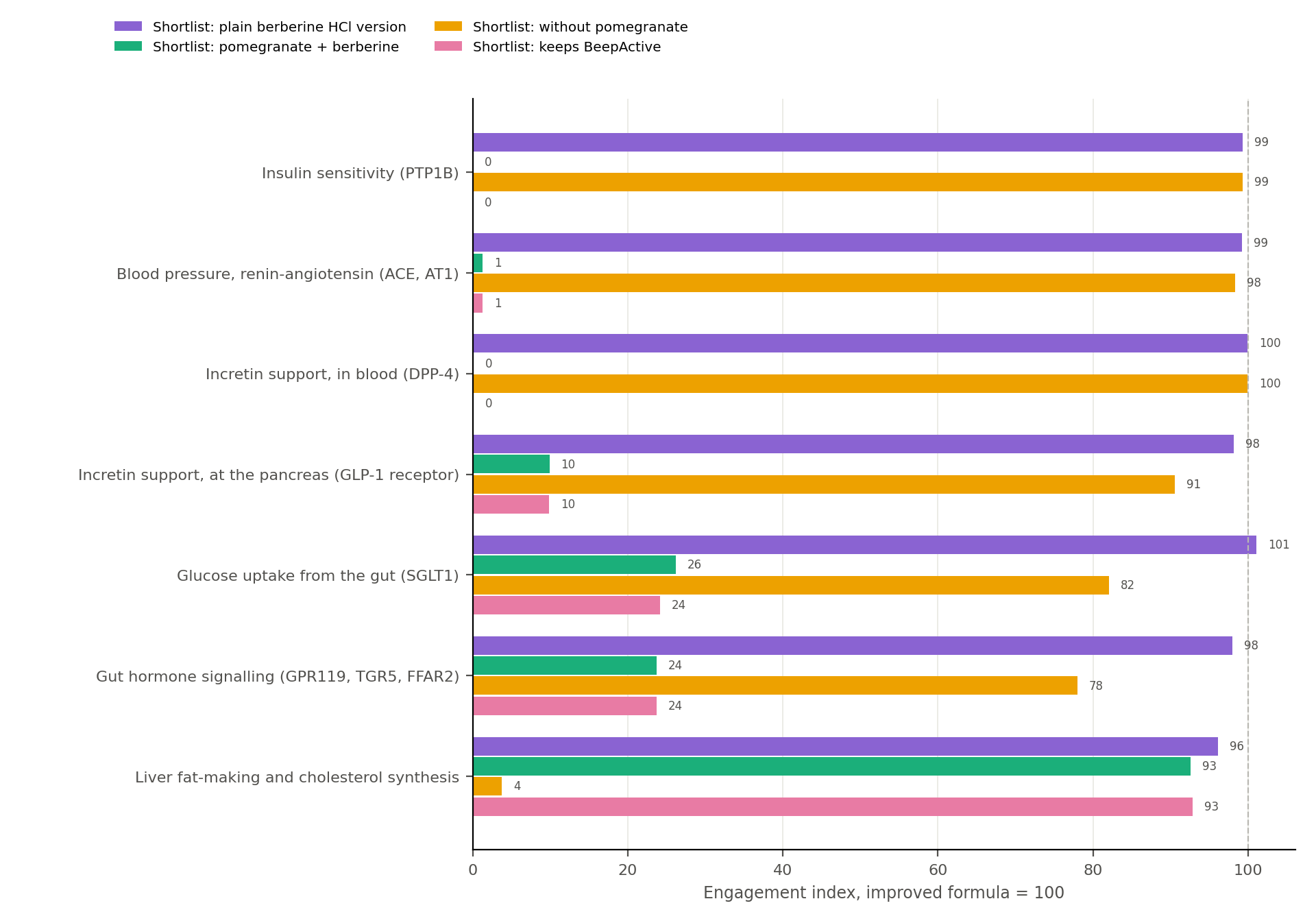
| Formula | Per capsule | Matches or beats Current Formula | Best of the five | Average index |
|---|---|---|---|---|
| Chosen formula | Berbevis 275 + green coffee 140 + pomegranate 125 + resveratrol 60 mg | 7 of 7 | 6 | 100 |
| Plain berberine HCl version | Berberine HCl 250 + green coffee 140 + pomegranate 125 + resveratrol 60 mg | 7 of 7 | 1 | 99 |
| Pomegranate + berberine | Pomegranate 125 + berberine HCl 400 mg | 7 of 7 | 0 | 22 |
| Without pomegranate | Berberine HCl 375 + green coffee 140 + resveratrol 60 mg | 6 of 7 | 0 | 79 |
| Keeps BeepActive | BeepActive 250 + pomegranate 63 + berberine HCl 200 mg | 7 of 7 | 0 | 22 |
- The same formula with plain berberine in place of Berbevis scores close behind (an average index of 99); Berbevis was chosen for its measured human advantage, below.
- Without pomegranate the formula loses most on the liver-fat and cholesterol-synthesis rows, which ellagic acid carries
(average index 79).
- Pomegranate and berberine alone, without green coffee and resveratrol, reach an average index of 22.
- Keeping BeepActive leaves the least room for new actives and scores lowest (average index 22).
What green coffee adds
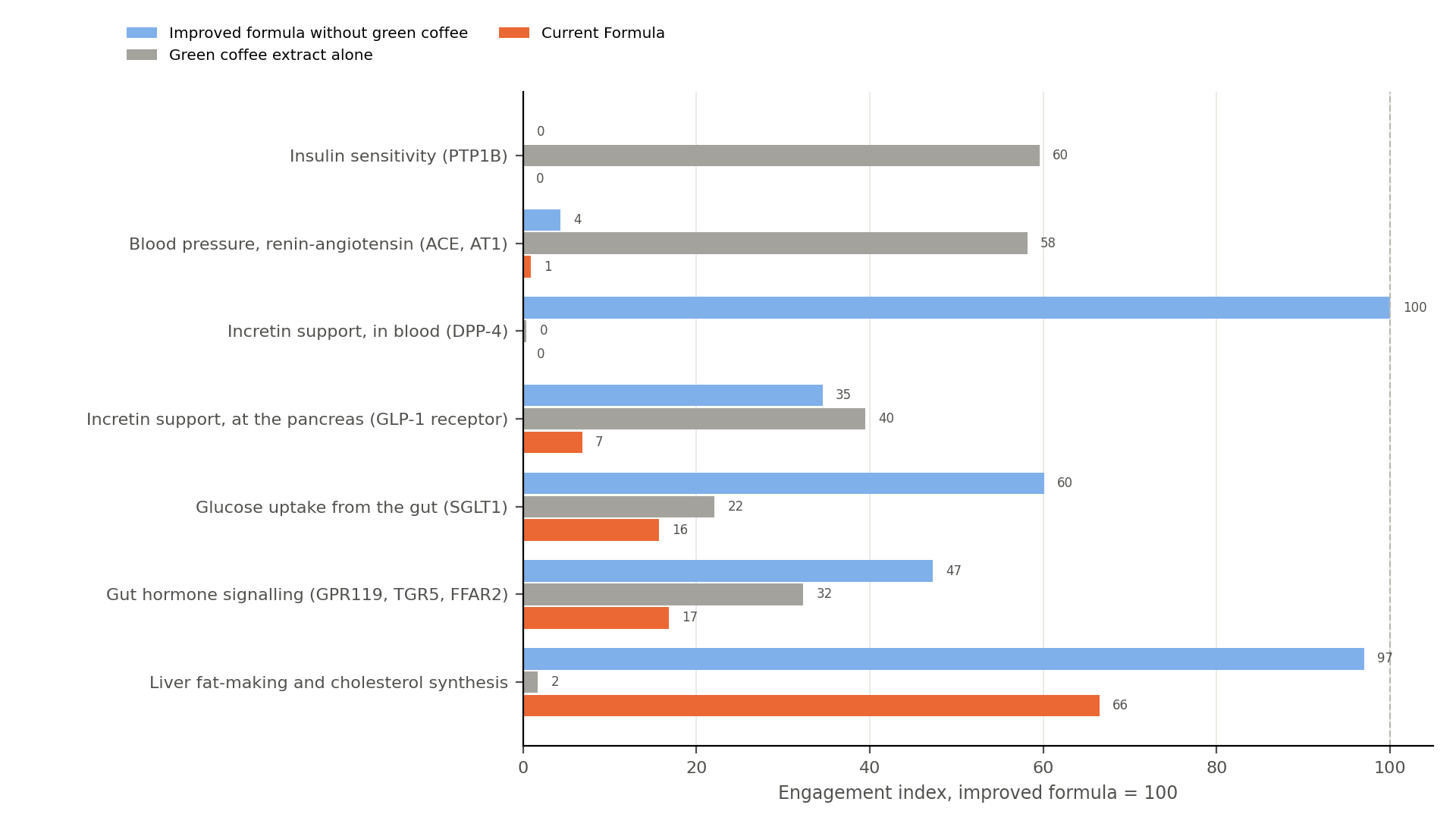
The chosen formula against the same formula without green coffee, and against green coffee extract alone.
- Reading this
- Without green coffee, the formula keeps an average 49% of its engagement on these mechanisms and still
beats Current Formula on 7 of 7. Green coffee extract alone reaches an average 31%, and the full formula beats it on all 7.
Part of that gain is absorption: in the formula, 28.0% of the chlorogenic acid reaches the blood against 15.4% when green coffee is taken alone, which the simulation attributes to berberine slowing chlorogenic acid’s breakdown.
Why Berbevis
Berbevis against plain berberine at the same 77 mg of berberine per capsule, twice a day.
| Reaches blood | Day-4 exposure (AUC) | Lowest level of the day | |
|---|---|---|---|
| Berbevis 275 mg | <0.1% | 13.2 ng·h/mL | 0.11 ng/mL |
| Reaches blood | Day-4 exposure (AUC) | Lowest level of the day | |
|---|---|---|---|
| Plain berberine, same 77 mg | <0.1% | 7.37 ng·h/mL | 0.023 ng/mL |
| Berbevis advantage | 1.7× | 1.8× | 4.7× |
The phospholipid form releases berberine more steadily and protects more of it through the gut wall, so the simulated exposure is 1.8× and the lowest level of the day 4.7× that of plain berberine. In people, two tablets of the same berberine Phytosome (376 mg berberine) gave 6.75 times the total plasma berberine exposure of 500 mg berberine chloride (452 mg berberine) in a randomised crossover in 12 adults [7].
In the gut, where berberine acts
Berberine is poorly absorbed, so most of each dose stays in the gut [7]. Plain berberine floods the gut fluid soon after each dose and is gone within about 2 hours; Berbevis releases it gradually and keeps it at active levels for about 8 hours per dose. Scored at the glucose transporter SGLT1 on the gut lining, which faces the gut fluid, that longer coverage gives the improved formula the highest engagement of any product.
| Product | Berberine in gut fluid, peak | Hours per dose at active level | SGLT1 engagement in the gut |
|---|---|---|---|
| Improved Formula | 97.4 µmol/L | 7.7 h | 0.64 |
| Berbevis 275 mg alone | 88.9 µmol/L | 7.7 h | 0.64 |
| Plain berberine (77 mg) | 922 µmol/L | 1.9 h | 0.15 |
| Market Comparator | 0.7 µmol/L | 0.0 h | 0.04 |
| Current Formula | no berberine | — | 0.006 |
Gut values are scored on the dissolved concentration in the gut fluid and compare products with one another on this scale only; they are not combined with the blood-based results above.
Drug-interaction screens
People managing blood sugar and heart health often take other medicines. Two questions: can the formula raise the levels of other medicines, and can other medicines change the formula’s levels?
| Molecule | CYP3A4 | CYP2C9 | CYP2C19 | CYP2D6 | CYP1A2 | Gut CYP3A4 | Gut P-gp |
|---|---|---|---|---|---|---|---|
| Berberine | <0.001 | <0.001 | <0.001 | <0.001 | <0.001 | 14.0 flag | 61.2 flag |
| Chlorogenic acid | 0.01 | 0.01 | 0.02 | 0.005 | 0.03 flag | 0.75 | Not an inhibitor |
| Ellagic acid | 0.003 | 0.005 | 0.01 | 0.002 | 0.24 flag | 0.17 | Not an inhibitor |
| Resveratrol | 0.01 | 0.07 flag | 0.13 flag | 0.005 | 0.02 | 0.13 | Not an inhibitor |
| Molecule | CYP3A4 | CYP2C9 | CYP2C19 | CYP2D6 | CYP1A2 | Gut CYP3A4 | Gut P-gp |
|---|---|---|---|---|---|---|---|
| Whole formula | 0.03 flag | 0.09 flag | 0.16 flag | 0.01 | 0.28 flag | 15.0 flag | 61.2 flag |
Blood: unbound peak level divided by the predicted inhibitory potency; at 0.02 or above a clinical interaction study is indicated (ICH M12). Gut: the simulated peak dissolved small-intestine concentration divided by the potency; threshold 10. Whole formula: each molecule’s ratio added per enzyme, since inhibitors of the same enzyme add up.
The whole formula reaches the screening threshold for blood CYP3A4, blood CYP2C9, blood CYP2C19, blood CYP1A2, gut CYP3A4 and gut P-gp. Berberine accounts for gut CYP3A4 and gut P-gp, in line with what has been measured in people: berberine taken at 300 mg three times a day for two weeks slowed CYP2D6, CYP2C9 and CYP3A4, raising exposure to the CYP3A4 test drug midazolam by 40% [13]. Resveratrol accounts for blood CYP3A4, blood CYP2C9 and blood CYP2C19, in the same direction as a study in people in which 1 g of resveratrol a day for four weeks slowed
CYP3A4, CYP2D6 and CYP2C9 [18]; the formula provides 118 mg a day. Chlorogenic acid (blood CYP3A4) and ellagic acid (blood CYP1A2) account for the rest, as model predictions; Current Formula’s ellagic acid already reaches the blood CYP1A2 threshold today (0.18). The label should advise people taking prescription medicines, particularly those cleared by these enzymes such as several statins, blood-pressure and diabetes medicines, to consult their doctor, and a laboratory inhibition study of the finished capsule would set the exact margins.
Can other medicines change the formula’s levels?
† Published data [15]; other calls are model predictions of the enzymes and transporters that clear each molecule. A medicine that blocks one of these routes can raise that molecule’s level.
| Molecule | CYP3A4 | CYP2C9 | CYP2D6 | UGT | P-gp |
|---|---|---|---|---|---|
| Berberine | Yes | No | Yes | Yes | Yes† |
| Ellagic acid | No | Yes | No | Yes | No |
| Chlorogenic acid | No | No | No | Yes | No |
| Resveratrol | No | Yes | No | Yes | No |
Regulatory position
All four ingredients are on FSSAI’s permitted lists for health supplements [14]. Berberis aristata root or stem extract is listed in Schedule II with a permitted range of 0.5–1 g a day; two capsules provide 550 mg of Berbevis, Indena’s recommended dose [17]. Standardised green coffee seed extract, pomegranate fruit, seed or skin extract and resveratrol are listed in Schedule III (entries 83, 155 and 159), which sets no quantity for them. Because berberine affects the clearance of several medicines, the label should carry a caution for people on prescription medicines, and for pregnancy and breastfeeding. The regulatory team should confirm the final label against the current schedules.
Assumptions and caveats
- These are modelled research results, not clinical efficacy or regulatory claims; label claims need regulatory review.
- The results are the model’s direct output; nothing was tuned to published values. Comparisons between products simulated in the same adults are the reliable reading; absolute blood levels are indicative. Engagement values compare products on one mechanism and are not occupancy percentages.
- Each target is scored on the unbound level at its site; intracellular targets in muscle and liver use the blood or portal level in their place.
- Ingredient specifications are representative grades: Berbevis at 28% berberine, green coffee at 50% chlorogenic acid, pomegranate at 40% ellagic acid and resveratrol at 98%, grades offered by Indian and international suppliers. The selected suppliers’ certificates of analysis would replace them.
- The interaction screen uses the simulated gut concentration in place of the whole dose dissolved in 250 mL; on that standard basis Current Formula would also reach the gut CYP3A4 threshold (1825554.7).
References
- Anjana RM, et al. Metabolic non-communicable disease health report of India: the ICMR-INDIAB national cross-sectional study (ICMR-INDIAB-17). Lancet Diabetes Endocrinol. 2023;11(7):474-89. doi:10.1016/S2213-8587(23)00119-5
- Jayashankara Y, Joshua L, Thomas JV. Effects of the combination of beetroot and pomegranate extracts on flow-mediated dilation and fatigue in adult humans: a randomized, double-blind, placebo-controlled, dose-ranging, cross-over study. Adv Complement Alt Med. 2026;9(1). doi:10.31031/ACAM.2026.09.000705
- Gilchrist M, et al. Effect of dietary nitrate on blood pressure, endothelial function, and insulin sensitivity in type 2 diabetes. Free Radic Biol Med. 2013;60:89-97. doi:10.1016/j.freeradbiomed.2013.01.024
- Siervo M, et al. Inorganic nitrate and beetroot juice supplementation reduces blood pressure in adults: a systematic review and meta-analysis. J Nutr. 2013;143(6):818-26. doi:10.3945/jn.112.170233
- Xie W, et al. Glucose-lowering effect of berberine on type 2 diabetes: a systematic review and meta-analysis. Front Pharmacol. 2022;13:1015045. doi:10.3389/fphar.2022.1015045
- Guo J, et al. The effect of berberine on metabolic profiles in type 2 diabetic patients: a systematic review and meta-analysis of randomized controlled trials. Oxid Med Cell Longev. 2021;2021:2074610. doi:10.1155/2021/2074610
- Petrangolini G, et al. Development of an innovative berberine food-grade formulation with an ameliorated absorption: in vitro evidence confirmed by healthy human volunteers pharmacokinetic study. Evid Based Complement Alternat Med. 2021;2021:7563889. doi:10.1155/2021/7563889
- Watanabe T, et al. The blood pressure-lowering effect and safety of chlorogenic acid from green coffee bean extract in essential hypertension. Clin Exp Hypertens. 2006;28(5):439-49. doi:10.1080/10641960600798655
- Zhu X, Wu C, Qiu S, Yuan X, Li L. Effects of resveratrol on glucose control and insulin sensitivity in subjects with type 2 diabetes: systematic review and meta-analysis. Nutr Metab (Lond). 2017;14:60. doi:10.1186/s12986-017-0217-z
- Collares LDN, et al. The effects of coenzyme Q10 supplementation on glycemic control in diabetic and non-diabetic individuals: a systematic review and meta-analysis. Crit Rev Food Sci Nutr. 2026;66(22):4187-209. doi:10.1080/10408398.2026.2624477
- Kong W, et al. Berberine is a novel cholesterol-lowering drug working through a unique mechanism distinct from statins. Nat Med. 2004;10(12):1344-51. doi:10.1038/nm1135
- Farah A, et al. Chlorogenic acids from green coffee extract are highly bioavailable in humans. J Nutr. 2008;138(12):2309-15. doi:10.3945/jn.108.095554
- Guo Y, et al. Repeated administration of berberine inhibits cytochromes P450 in humans. Eur J Clin Pharmacol. 2012;68(2):213-7. doi:10.1007/s00228-011-1108-2
- Food Safety and Standards Authority of India. Direction under section 16(5) of the Food Safety and Standards Act, 2006 regarding operationalization of FSS (Health Supplements, Nutraceuticals, Food for Special Dietary Use, Food for Special Medical Purpose and Prebiotic and Probiotic Food) Regulations, 2022. F. No. Std/SP-05/T(Nutraceutical-2022) [E-5184]; 29 March 2022. Schedule II entry 57; Schedule III Part B entries 83, 155 and 159.
- Zhang YT, et al. Different structures of berberine and five other protoberberine alkaloids that affect P-glycoprotein-mediated efflux capacity. Acta Pharmacol Sin. 2019;40(1):133-42. doi:10.1038/s41401-018-0183-7
- Lee YS, et al. Berberine, a natural plant product, activates AMP-activated protein kinase with beneficial metabolic effects in diabetic and insulin-resistant states. Diabetes. 2006;55(8):2256-64. doi:10.2337/db06-0006
- Indena S.p.A. BERBEVIS® Berberine Indena Phytosome™ product sheet, 2025: standardised to 28–34% berberine by HPLC; recommended dose 550 mg once or twice a day.
- Chow HHS, et al. Resveratrol modulates drug- and carcinogen-metabolizing enzymes in a healthy volunteer study. Cancer Prev Res (Phila). 2010;3(9):1168-75. doi:10.1158/1940-6207.CAPR-09-0155