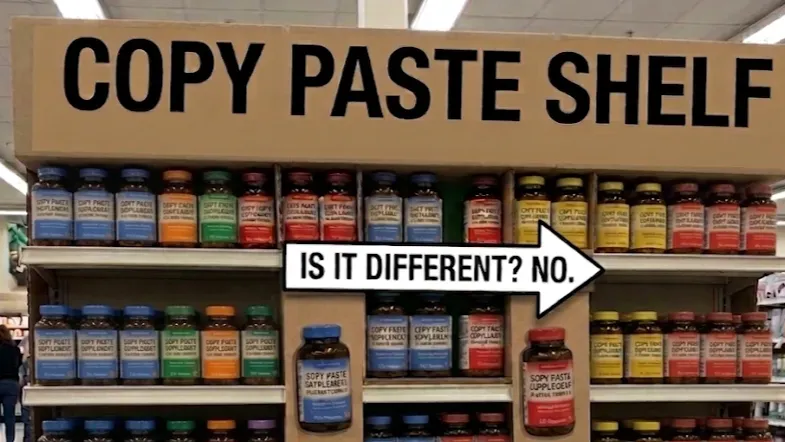
Consumers scrolling through platforms like TikTok Shop often assume the trending wellness and beauty brands they see actually own the scientific discoveries inside those sleek bottles. The physical supply chain operates quite differently because a handful of massive manufacturing facilities produce identical base products for competing companies across the entire industry. Founders prioritize quick launch timelines over a solid structural foundation by sourcing ready made products and relying solely on packaging design to stand out in a crowded space.
The White Label Reality: Identical Formulas in a Saturated Market
The entry level tier of this industry relies on white labeling where founders buy completely standardized formulas that thousands of other brands also sell just to slap a new logo on the front. This dynamic creates a saturated market where competing brands sell the exact same chemical composition wrapped in different marketing narratives. The next step up is private labeling where manufacturers allow minor modifications to existing stock formulas while legally retaining full ownership of the core recipe.
The Custom Product Trap: Paying to Rent Your Own Concept
When founders attempt to move past private label and build a truly custom product they often walk right into a financial trap by paying a facility an upfront development fee ranging from three thousand to twelve thousand dollars. Brand owners hand over this capital and assume the payment grants them ownership of the final recipe but this assumption is legally incorrect. Unless a legal agreement explicitly transfers intellectual property rights the manufacturer legally owns the asset while the brand merely pays to rent the product they helped conceptualize.
Surrendering the Science: Profit Margins and "Pixie Dusting"
Lacking intellectual property ownership means the brand surrenders all control over the actual science to manufacturers who operate businesses designed to maximize their own profit margins. When a facility owns the formula they control the input costs and frequently reduce the concentration of expensive active ingredients to the bare minimum required to secure a label claim. The industry refers to this practice as pixie dusting where a brand highlights a rare peptide or a popular adaptogen on their marketing materials while the product contains a dose that falls far below the therapeutic threshold. Manufacturers hide these subclinical dosages behind the regulatory loophole of proprietary blends which allows them to group ingredients together on the label without ever disclosing the actual amounts used. The founder cannot force the manufacturer to increase the active compounds because the founder does not own the recipe.
The Scaling Handcuffs: How Rented Formulas Destroy Financial Exits
The hidden costs of renting a formula materialize painfully when a brand attempts to scale production to meet rising consumer demand. If the brand does not own the intellectual property they cannot take their recipe to a larger facility and remain legally handcuffed to their original supplier. The manufacturer understands the brand cannot leave without starting the formulation process over from scratch which allows the facility to dictate pricing and control lead times with absolute authority. This lack of ownership eventually derails financial exits because private equity firms evaluating a brand for acquisition will immediately walk away when they discover the company holds no tangible value on paper.
The Solution: Securing IP and Manufacturing Freedom with Formulaite
Building a resilient company requires a fundamental shift in how founders approach product development. Formulaite provides full intellectual property ownership of your formula at a fraction of the traditional development time. By utilizing Formulaite brand owners secure custom recipes backed by rigorous clinical data ensuring the product actually delivers on its marketing promises to build a long term competitive moat and secure lasting customer trust. This structural foundation grants founders the freedom to escape manufacturing confinement and transfer production anywhere in the world to build a truly scalable product line.