Bioavailability is the single most important concept in supplement science that most consumers have never heard of. It refers to the fraction of an ingested nutrient that actually reaches systemic circulation and becomes available for biological activity. A supplement can contain the purest extract on Earth, but if the body cannot absorb it, the therapeutic value is effectively zero. Understanding bioavailability transforms the way we evaluate supplement quality and separates evidence-based formulation from expensive guesswork.
How Is Bioavailability Defined and Measured?
Pharmacokinetically, bioavailability is expressed as a percentage relative to intravenous administration, which by definition achieves 100% systemic availability. For oral supplements, bioavailability is calculated by measuring the area under the plasma concentration-time curve (AUC) after ingestion versus the AUC after intravenous delivery of the same compound. Most botanical and nutraceutical ingredients have oral bioavailability far below what consumers expect. Curcumin, arguably the most studied natural compound in modern science, has a native oral bioavailability estimated at less than 1% due to poor aqueous solubility, rapid Phase II metabolism, and extensive first-pass hepatic clearance. This means that a standard 500 mg Curcumin capsule may deliver fewer than 5 mg of active compound to the bloodstream.
Why Do Most Supplements Have Low Bioavailability?
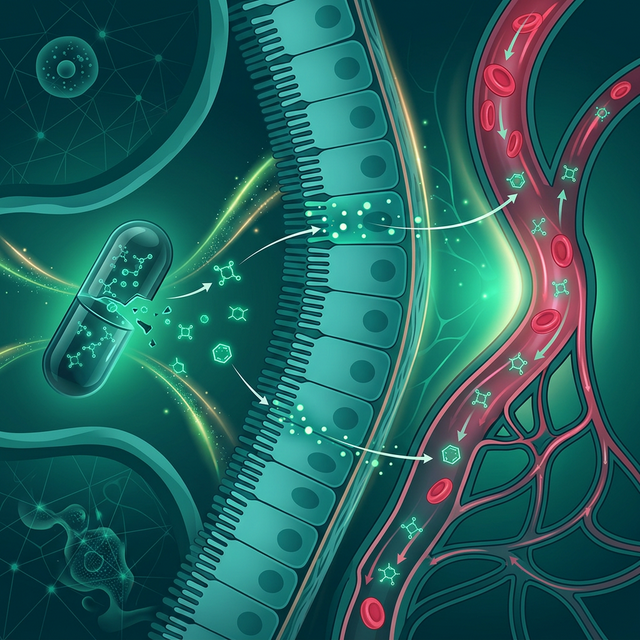
Several physiological and chemical barriers conspire to limit the absorption of orally administered nutrients. The first barrier is aqueous solubility. Most potent plant polyphenols, including Curcumin, Resveratrol, and Quercetin, are hydrophobic molecules that dissolve poorly in the aqueous environment of the gastrointestinal tract. Without dissolution, absorption cannot begin. The second barrier is the intestinal epithelium itself. Molecules must cross the enterocyte membrane either by passive transcellular diffusion, which favors small lipophilic molecules under 500 Daltons, or by active transport via carrier proteins. Many botanical compounds are too large or too polar for efficient passive absorption. The third barrier is first-pass metabolism, where the liver rapidly conjugates absorbed molecules with glucuronic acid or sulfate groups, converting them into inactive metabolites that are excreted before reaching target tissues. This triple gauntlet of solubility, permeability, and metabolism explains why a bottle claiming 1000 mg of a botanical extract may deliver a biologically negligible dose.
What Technologies Improve Supplement Bioavailability?
Modern formulation science has developed several validated strategies to overcome these absorption barriers. Phytosome technology, commercialized by companies like Indena, complexes botanical extracts with phosphatidylcholine to create lipid-compatible structures that are recognized by the intestinal membrane as dietary fat. Clinical data from Cuomo et al. published in the Journal of Natural Products demonstrated that Curcumin-phytosome formulations achieved 29-fold higher plasma concentrations compared to unformulated Curcumin. Self-emulsifying drug delivery systems, known as SEDDS, encapsulate lipophilic compounds in surfactant mixtures that form fine emulsions upon contact with gastric fluid, dramatically increasing the surface area available for absorption. Nanoparticle encapsulation using polymers such as PLGA creates sub-micron particles that exploit endocytic uptake pathways, bypassing the size limitations of passive diffusion. Piperine co-administration, derived from black pepper, inhibits the glucuronidation enzymes responsible for first-pass metabolism, effectively extending the circulating half-life of co-administered compounds. Each of these strategies addresses a different point in the absorption cascade, and the most effective formulations often combine multiple approaches.
How Can Consumers Evaluate Bioavailability Claims?
The supplement industry is rife with unsubstantiated bioavailability claims, making consumer evaluation difficult but not impossible. The gold standard is published pharmacokinetic data from human clinical trials showing plasma concentration curves. Brands that invest in this level of validation typically reference specific studies with measurable endpoints. Generic claims like "enhanced absorption" or "maximum potency" without supporting data are red flags. Consumers should look for third-party certifications from organizations such as NSF International, USP, or ConsumerLab that independently verify both content and dissolution characteristics. The dissolution test is particularly important because it measures whether the active ingredient actually releases from the dosage form in simulated gastrointestinal conditions. A tablet that passes through the digestive tract intact is delivering zero bioavailability regardless of how much active ingredient it contains.
What Role Does Formulation Play Beyond the Active Ingredient?
Bioavailability is not determined solely by the active compound but by the entire formulation matrix. Excipients, the inactive ingredients that make up the bulk of most supplements, can significantly enhance or destroy bioavailability. For example, certain fillers like calcium carbonate can raise the pH of the microenvironment around an acid-sensitive compound, accelerating its degradation in the stomach. Magnesium stearate, a common lubricant used in tablet manufacturing, can form a hydrophobic film around particles that inhibits wetting and delays dissolution. Conversely, carefully selected excipients such as hydroxypropyl methylcellulose (HPMC) can control the release rate to match the absorption window of the small intestine. This is why two supplements containing identical doses of the same extract can produce wildly different plasma levels, one formulated with bioavailability in mind and the other assembled purely for manufacturing convenience. The formulation is the product, and the active ingredient is only the starting point.
How Is AI Changing Bioavailability Optimization?
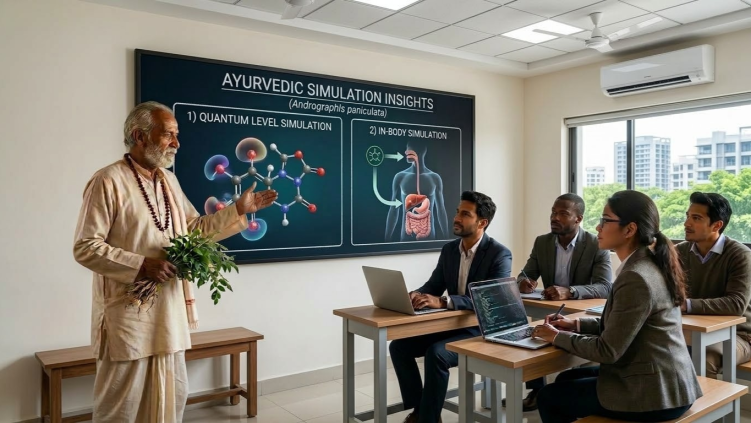
Computational approaches are transforming bioavailability prediction from a trial-and-error process into a data-driven science. Physiologically based pharmacokinetic (PBPK) modeling platforms can simulate the absorption, distribution, metabolism, and excretion of a compound through a mathematical representation of human physiology. These models incorporate parameters such as intestinal transit time, membrane permeability coefficients, hepatic blood flow, and enzyme kinetics to predict plasma concentration profiles before a single capsule is manufactured. Machine learning algorithms trained on historical pharmacokinetic datasets can identify non-obvious correlations between molecular descriptors and absorption outcomes, enabling formulators to screen excipient combinations computationally rather than empirically. This shift from physical to virtual prototyping reduces the cost and timeline of formulation development while producing supplements that deliver measurable biological activity rather than label claims.